Retrace Your Steps as Much as You Like
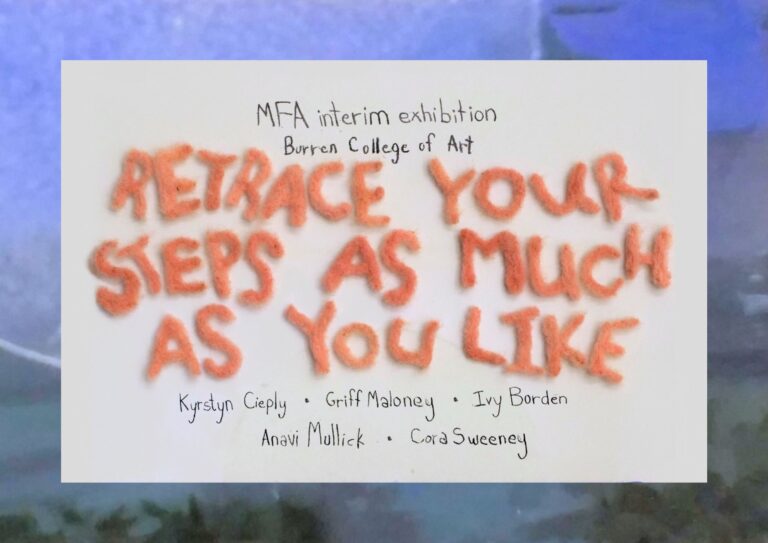
MFA Interim Exhibition
Ivy Borden · Kyrstyn Cieply · Griff Maloney
Anavi Mullick · Cora Sweeney
Opens Saturday 5 December 2026
Exhibition launch: 6–8pm
Burren College of Art
About the exhibition
Retrace Your Steps as Much as You Like emphasizes the collective ensemble and mnemonics of art-making, looking to the past lives of people, objects, technologies, and places to generate reparative paths forward. The work in this exhibition retraces memory, relationality, and the reconnection of material to meaning.
The show’s title is inspired by Victor Hugo’s writings comparing the arts and sciences.
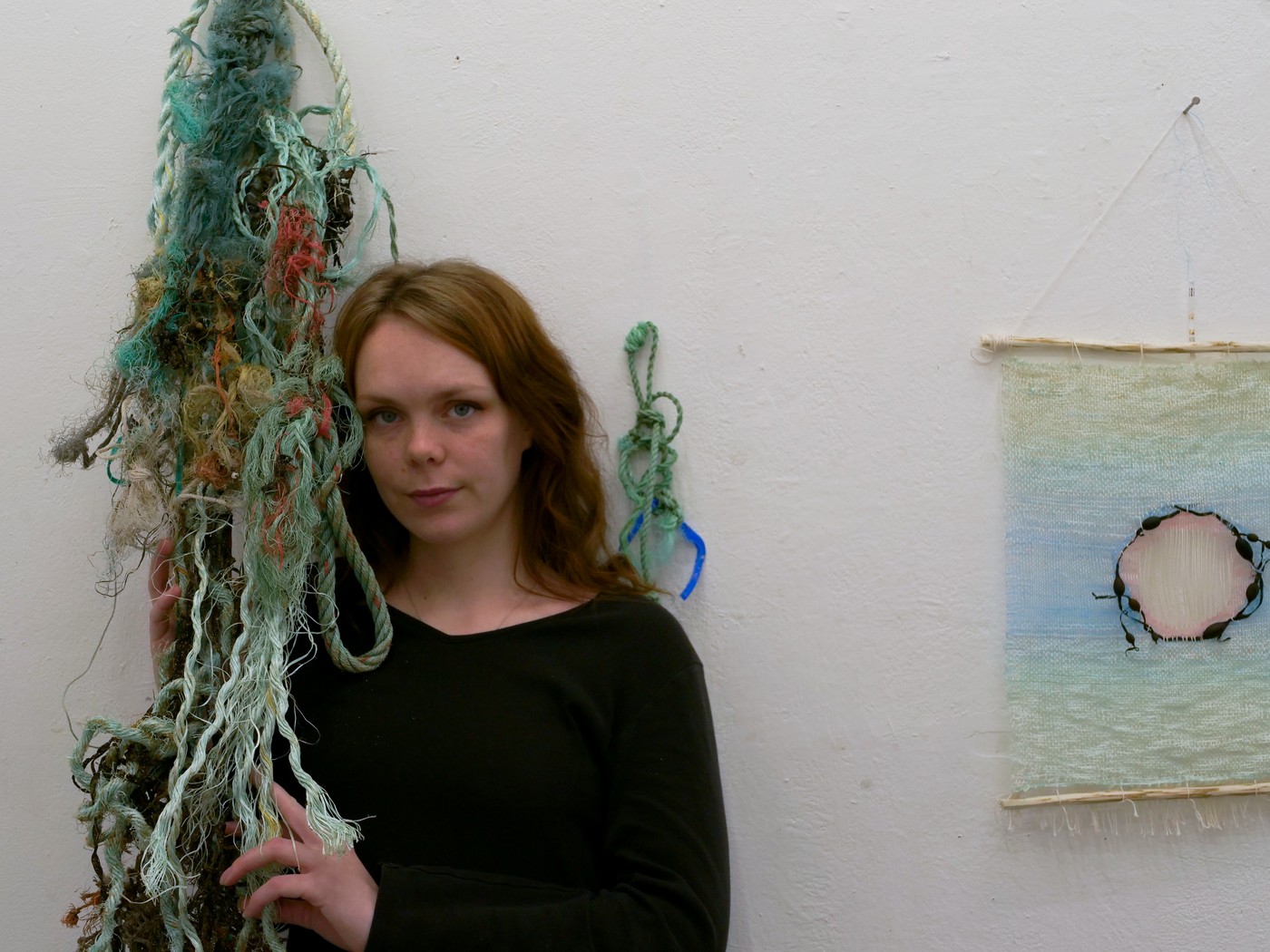
Ivy Borden
Artist bio
Ivy Borden is a multimedia weaver whose works synthesize the organic with the synthetic. She received her bachelor's and master's degrees in Art History from the University of Alabama in the U.S. before moving to Ireland in 2025 to pursue an MFA in Art & Ecology at the Burren College of Art. Since the beginning of her MFA, she has exhibited work at the 126 Gallery in Galway, the KAVA Art Centre in Kinvarra, and will be included in the 2026 AIB Portrait Prize Exhibition touring through the National Gallery of Ireland in Dublin, the Galway Arts Centre, and the Limerick City Gallery of Art.
Project statement
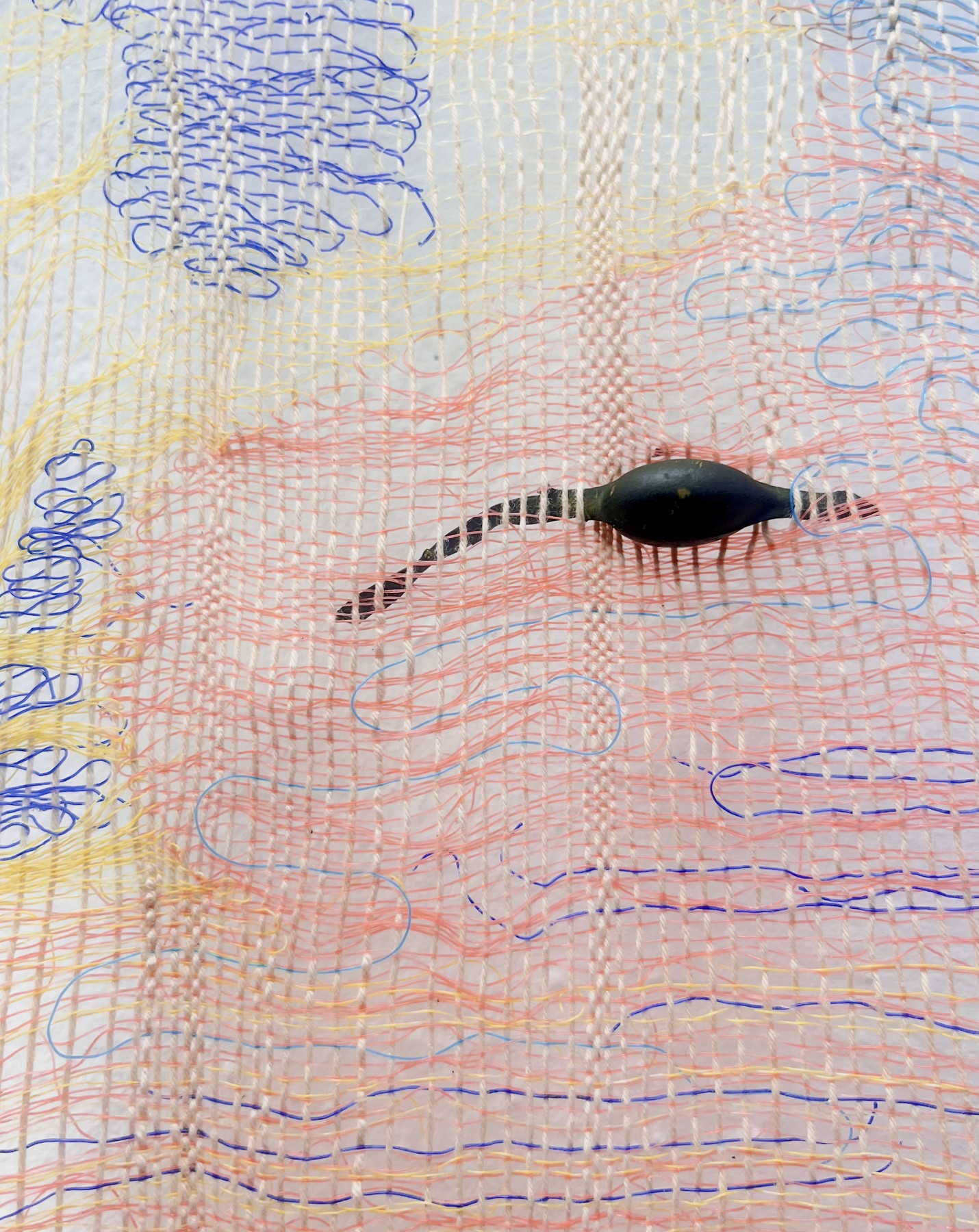
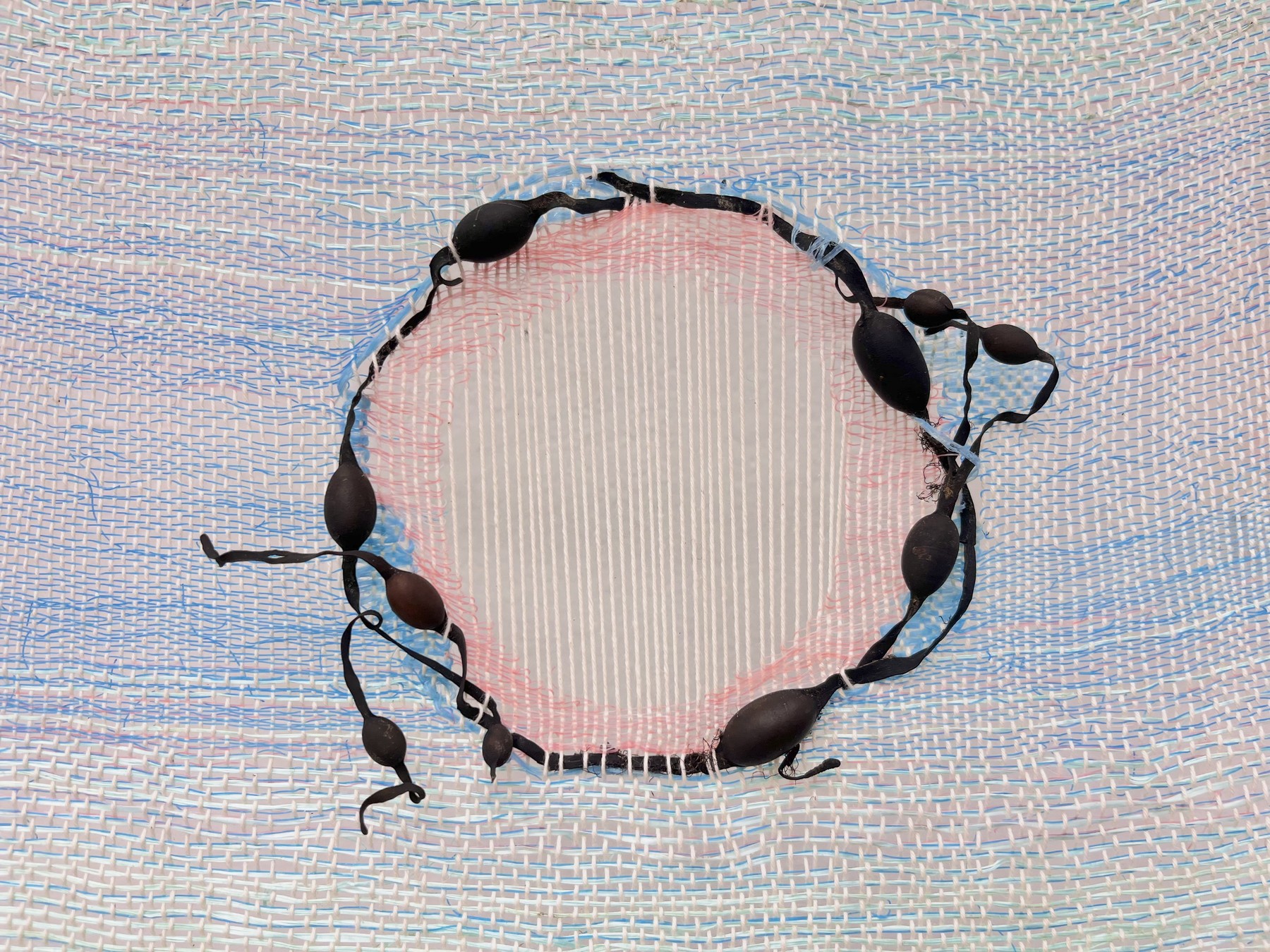
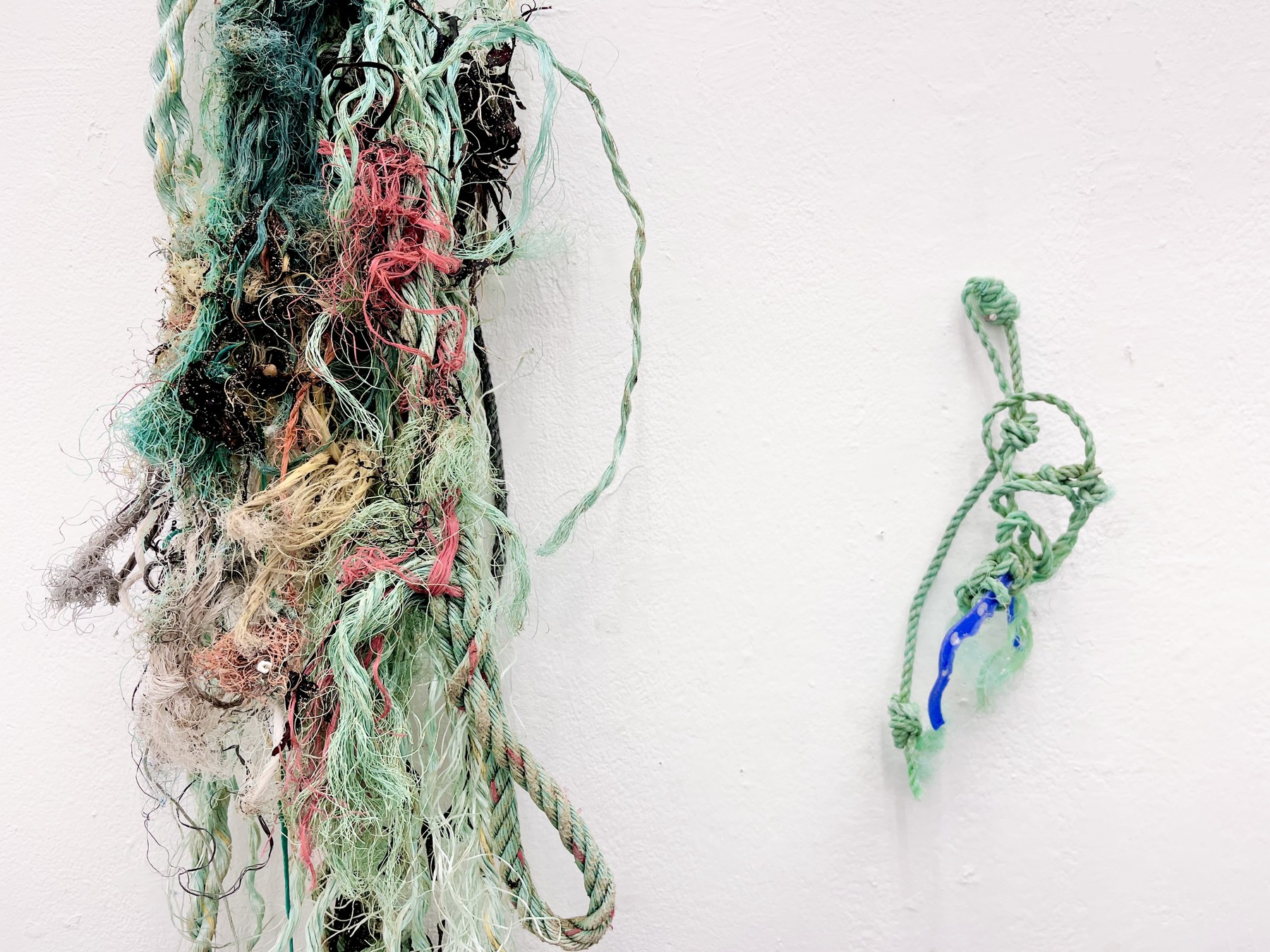
The current existence of plastics in society is one of industrialized mass production and single-use disposability. The goal of this installation is to challenge dominant cultural attitudes towards plastic and encourage new ways of assessing its value. Marine plastics gathered from Fanore Beach are meticulously woven into delicate tapestries and displayed alongside suspended fossils and tangled masses of plastic and seaweed generated by the ocean's currents. These objects put plastics in dialogue with their source–fossils (via fossil fuels)–to demonstrate the sacred, care-oriented potential of future relationships with this material.
Kyrstyn Cieply
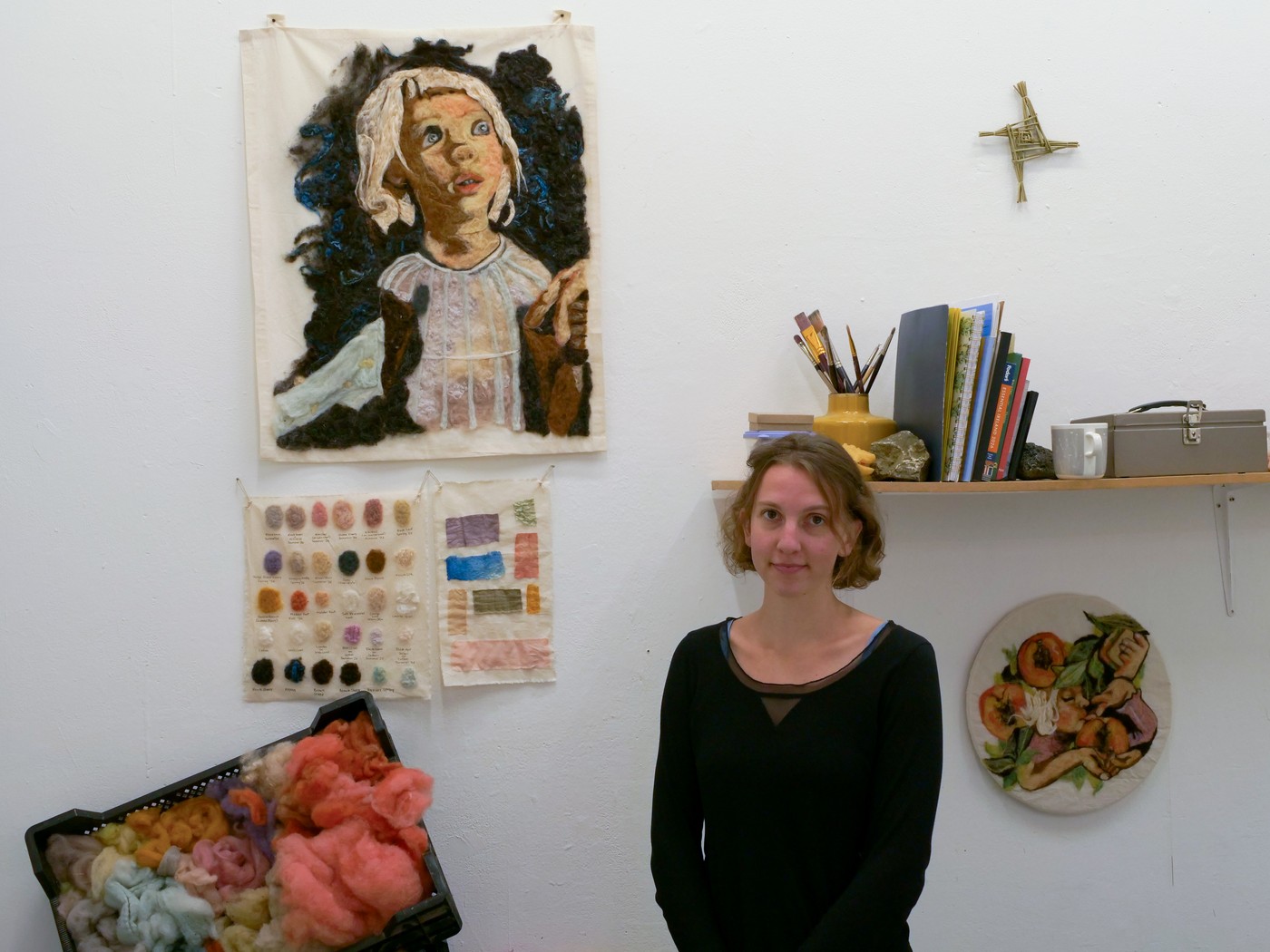
Artist bio
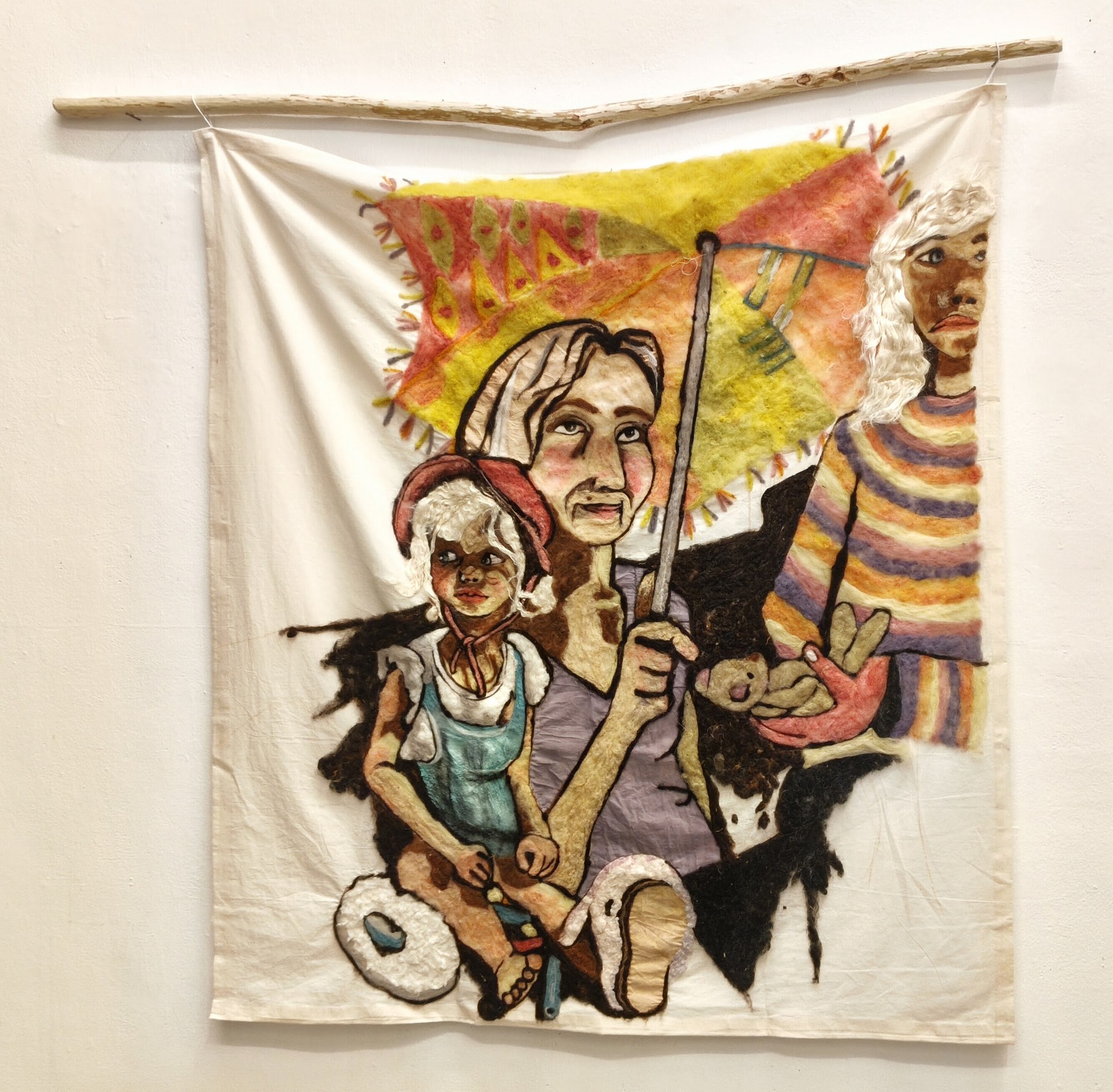
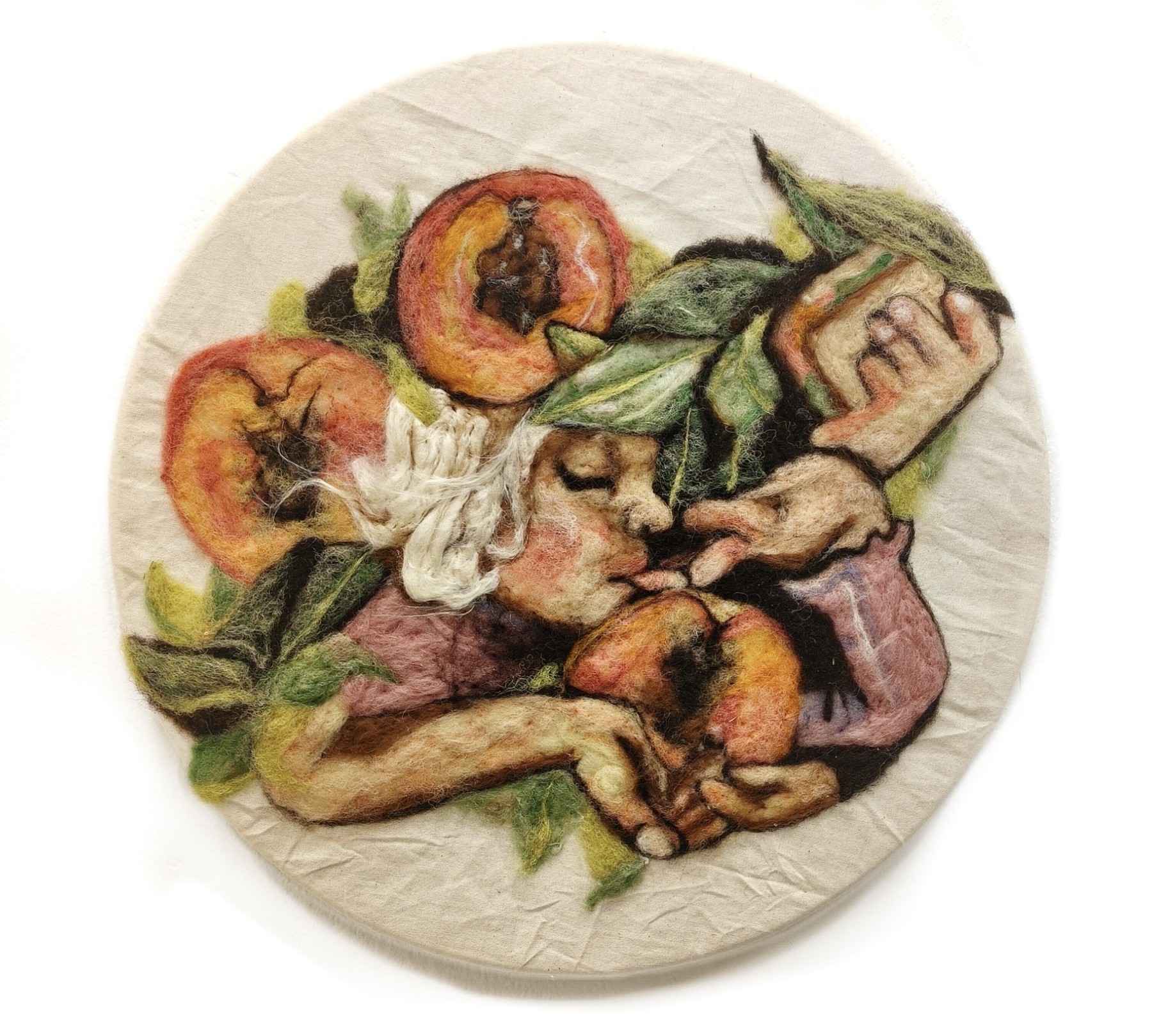
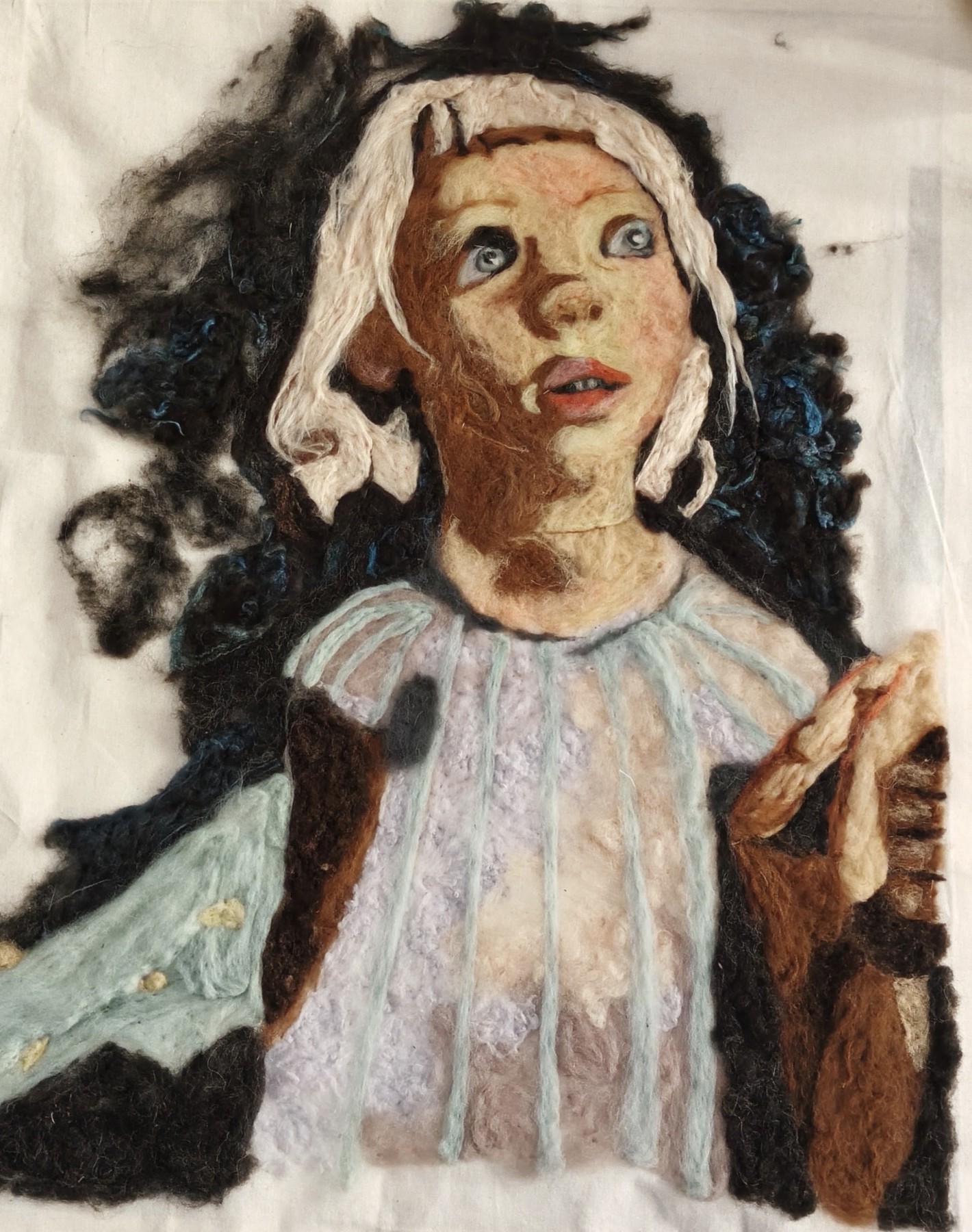
Kyrstyn Cieply is a fiber artist who uses wool felting and hand dying practices. To explore work about care—care for materials, for memory, for the fragile continuity between bodies and the earth. Cieply received her bachelors in Studio Art at Principa College, 2024. Her education in the arts and humanities was shaped by a curiosity about the connections between aesthetics, ethics and practicing art as a way of processing and bearing witness to the state of the world. She received the Katheryn Cogswell Maule Art opportunity Award in 2024 which included the purchase of an artwork for the art collection at Principia College. Kyrstyn’s exhibitions include Real Time: Fall 2023 Prague Abroad Exhibition, 6-18 February 2024, A thing I cannot Name: Spring 2023 Drawing II Exhibition, 3-12 May 2023, 23:The Principia Annual Juried Student Exhibition. Juror: Artist Cayce Zavaglia, 12 April 2023, and their 22: The Principia Annual Juried Student Exhibition. Juror: Artist Cheryl Wassenaar, 12 April 2022
Project statement
Textiles make the physicality of the human condition palpable: their softness and warmth speak to our most fundamental needs for comfort, safety, and connection. In times of ecological and political precarity, such reminders of tenderness become urgent. The tactility of wool and the slowness of handwork become quiet acts of resistance—affirmations of empathy and endurance in a world intent on acceleration and extraction. My studio practice therefore exists at the intersection of material experiment and feminist ecological reflection. It asks how stories can be embedded in fiber, how softness can be radical. Through this work, I continue to. explore how repetition, care, and attention can translate the messy, composting substance of life into a language of art. As a graduate student at The Burren College of Art studying art and ecology my approach to art is one of using wool as a medium to explore memory and relationship.
Griff Maloney
Artist bio
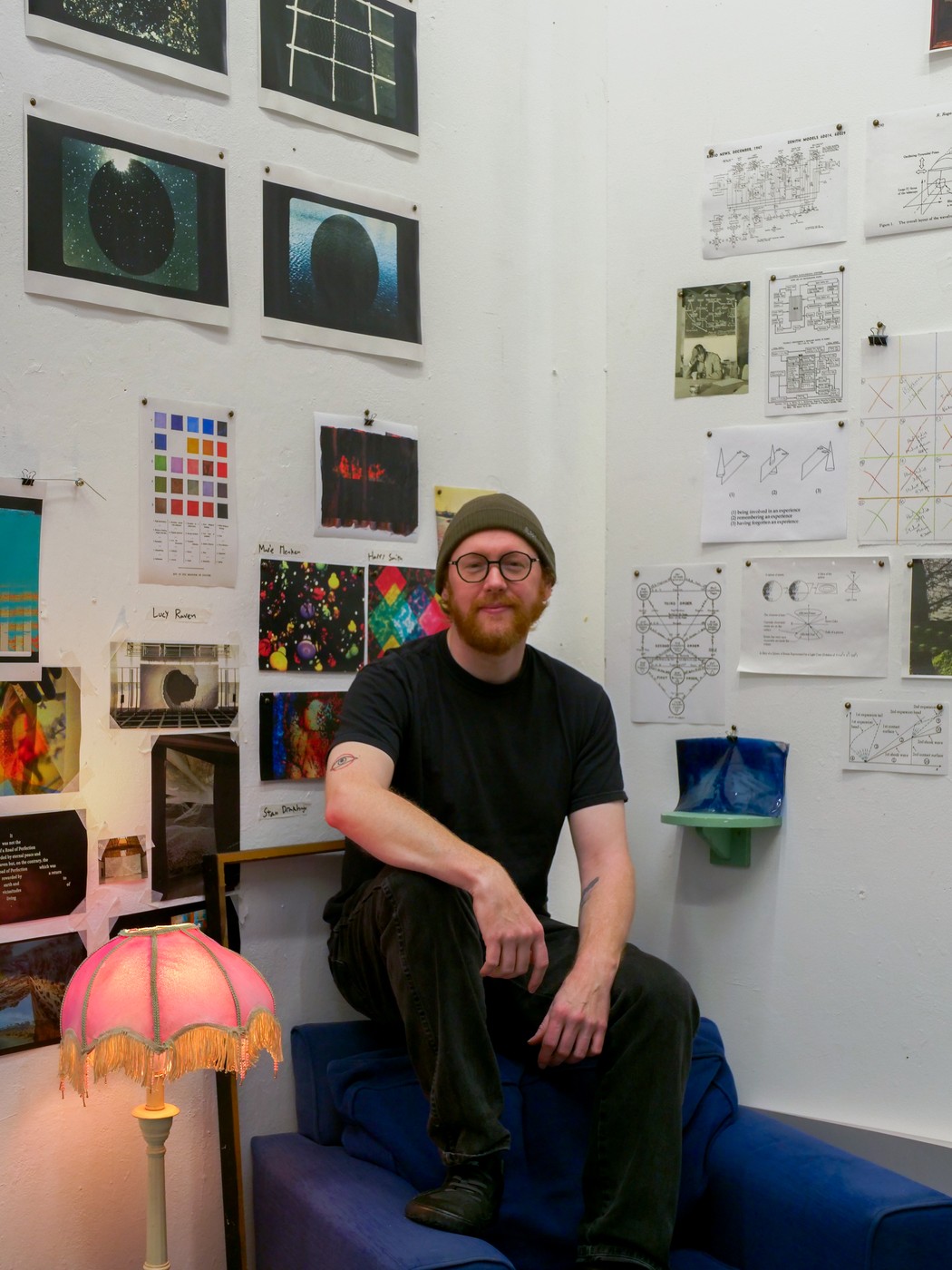
Griff Maloney is a lens-based artist working in new media, video, and biomaterials. His work interrogates the relationship between physical and electronic memory via digital transformation, highlighting the deep longing for connection in the modern moment. Following a decade of work in film and video production in New York City and Los Angeles he relocated to Ireland to pursue a more ecologically focused art practice based around natural landscape, biomaterials, and embodied experience. His work has been featured in Bright Wall / Dark Room, Chuchifritos Gallery, KAVA Art Centre, & The University of Galway Staff Club.
Project statement
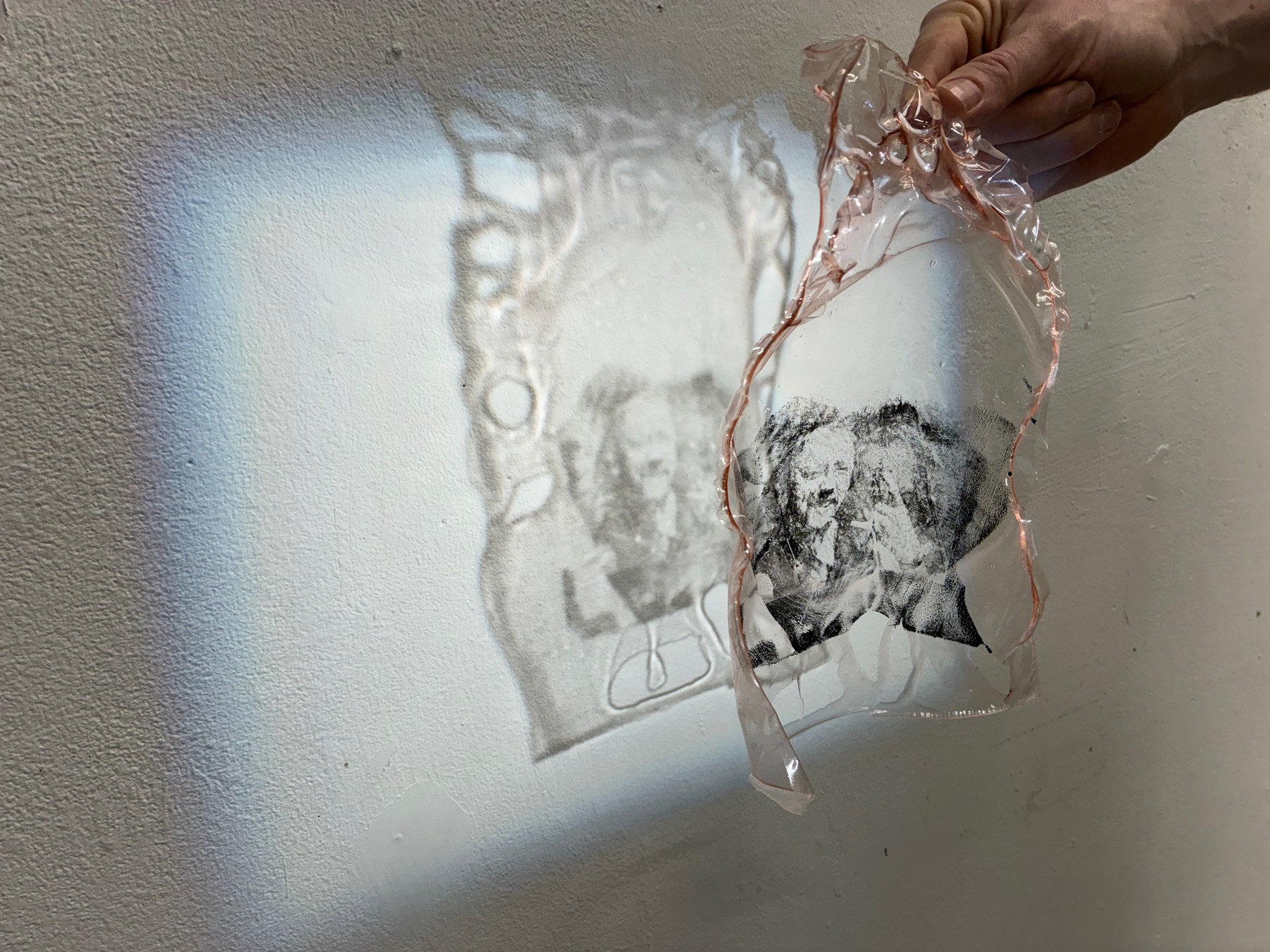
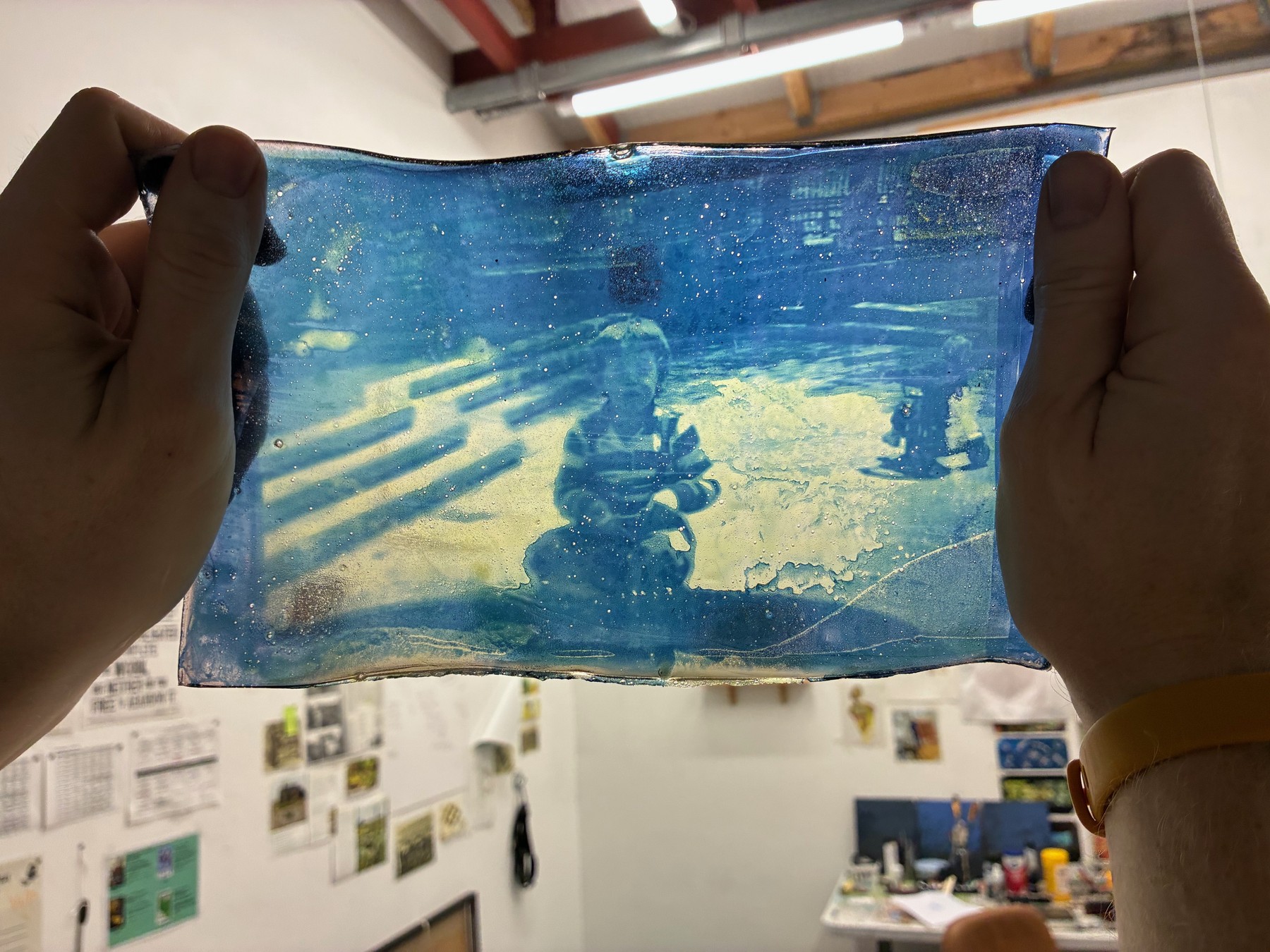
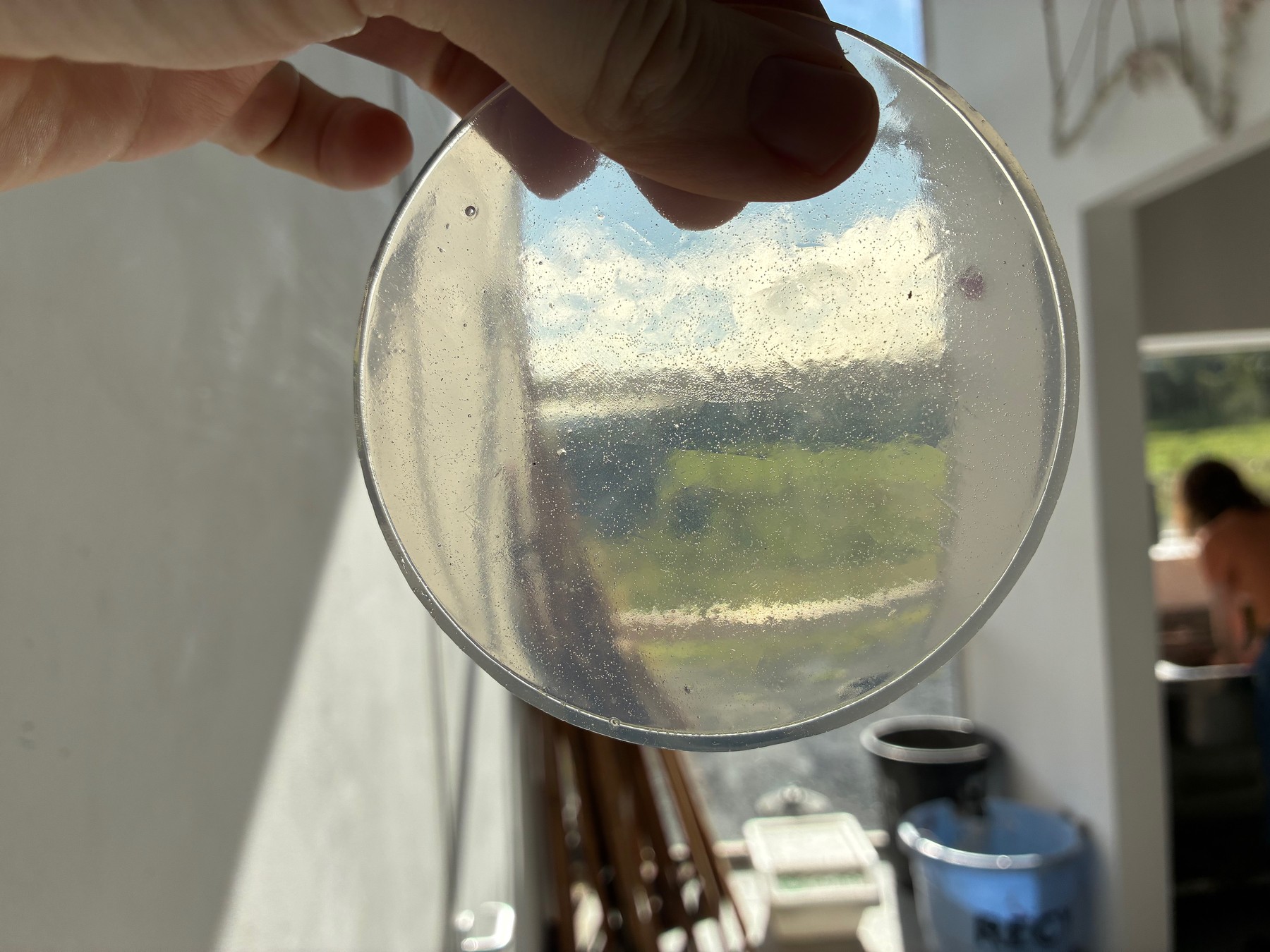
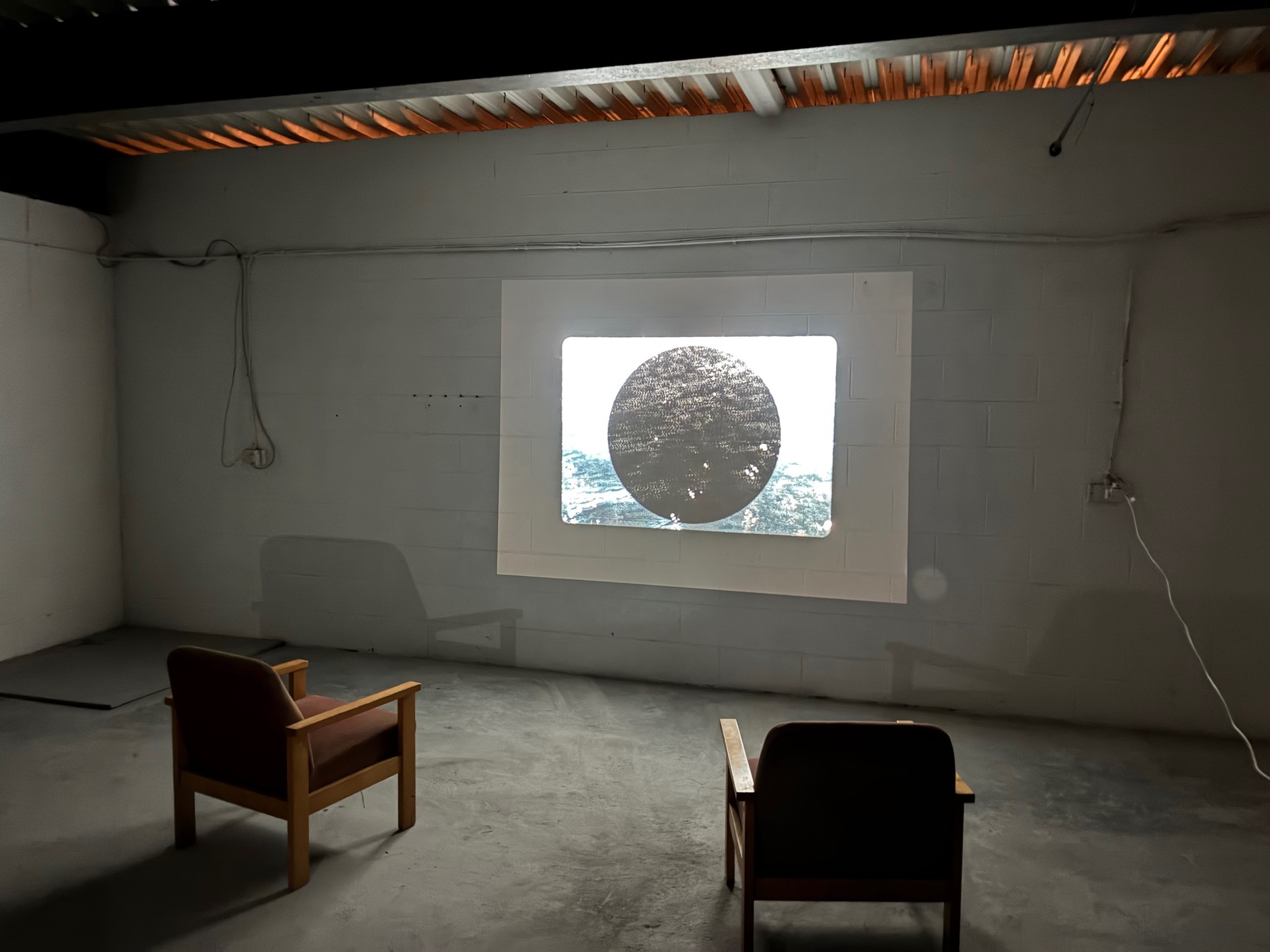
How do we remember people and places? Is memory different in the era of digital recording tools? Colors shift, sounds change, and the physical sensation of the embodied moment fades or is never recorded at all. Pictures captured on cellphones, audio recordings, and videos stand in for remembering and the object of remembrance is transformed by this offloading. These two lens-based works represent attempts to revivify personal and communal memory into a more physical and embodied space through the techniques of biomaterials and installation. Is it possible to reclaim our physical memories from the ancillary memory that we have entrusted to digital devices? Can we reach through the digital veil and reclaim these people and moments?
Anavi Mullick
Artist bio
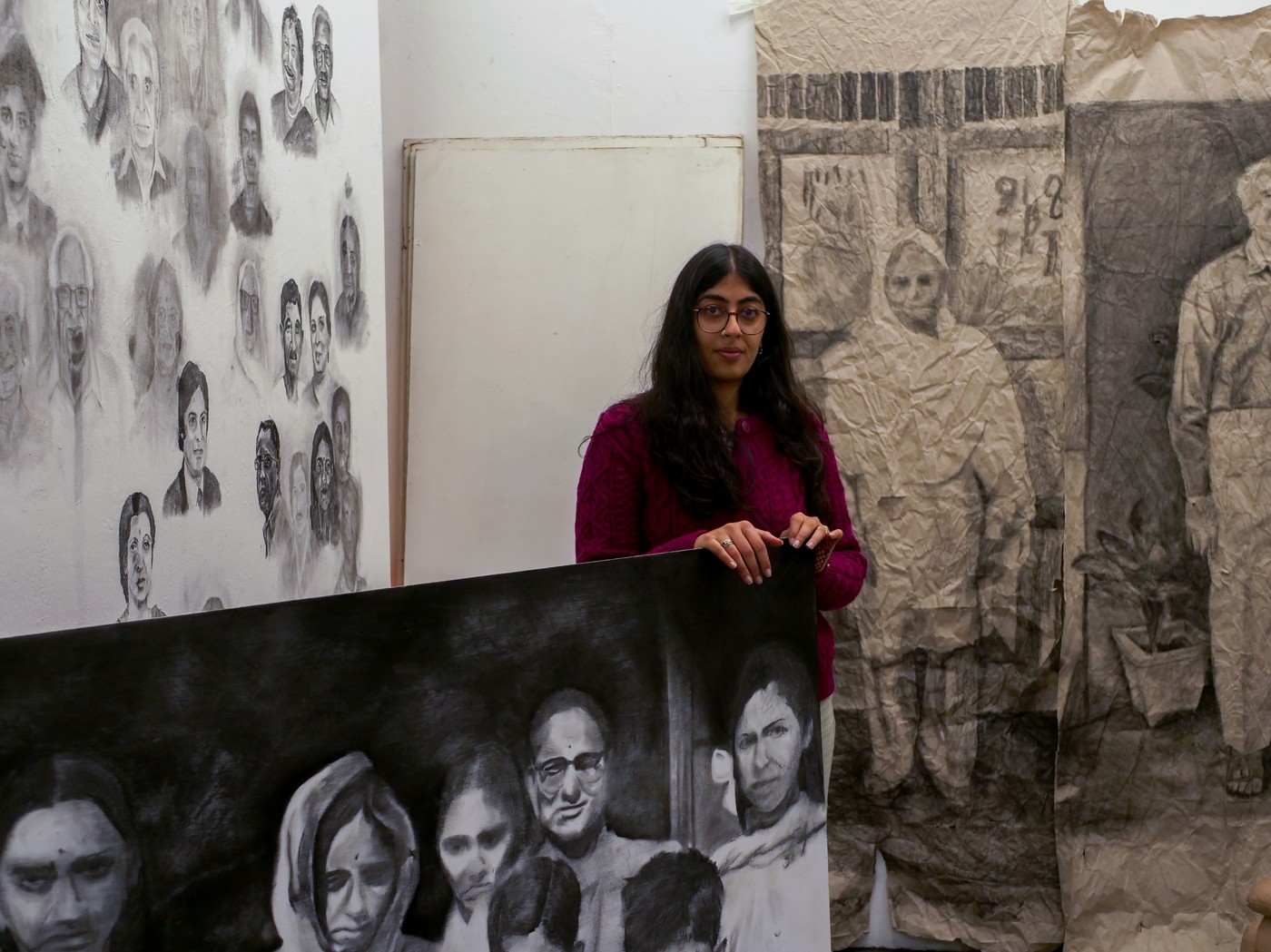
Anavi Mullick is an artist from Bangalore, India. Her work explores questions of home, displacement, memory and belonging. She is currently pursuing an MFA in Studio Art at the Burren College of Art in Ireland. She holds a Bachelors in Fine Arts from the Minneapolis College of Art & Design (MCAD) where she majored in Drawing and Painting and minored as a Teaching Artist. Some of her notable recent exhibitions include Inland Among Stone at KAVA (Ireland), Untitled 19 at SOOVAC, Expanded Disciplinarity Chapter I: Constructing Painterly Relations at Art Centrix Space (Delhi), The Pollen waits on Tiptoe , curated by Manasa Raj, the Ravi Jain Memorial Foundation Exhibition at Dhoomimal Gallery (Delhi), Living a Dark Night with Kala Chaupal at Gallery Espace and India Art Fair (Delhi), and Art Mela at 105arts (Chandigarh). Her work has been featured in Abir Pothi, MASH India, Bbtl News, and in the Irish Arts Review.
Project statement
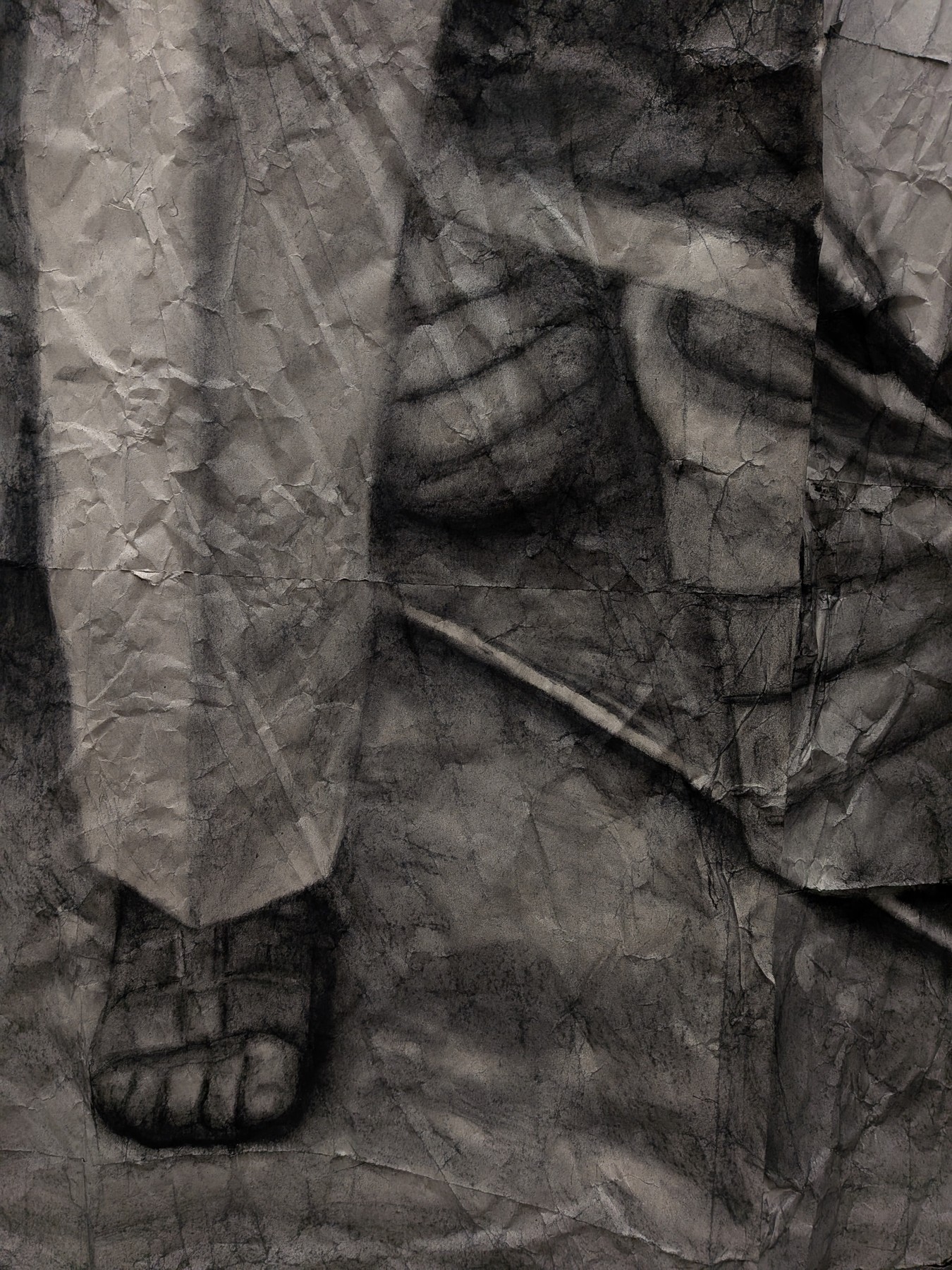
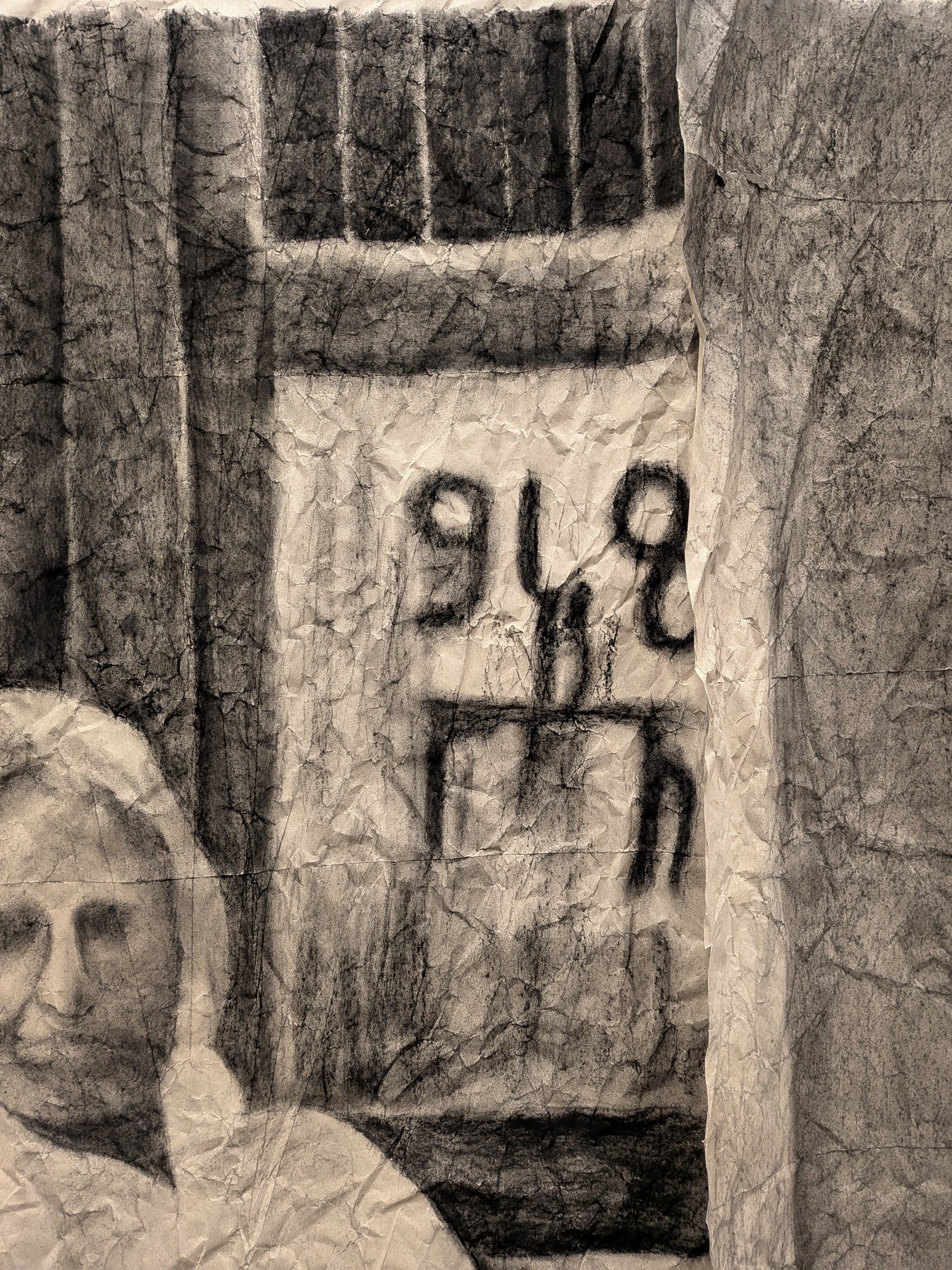
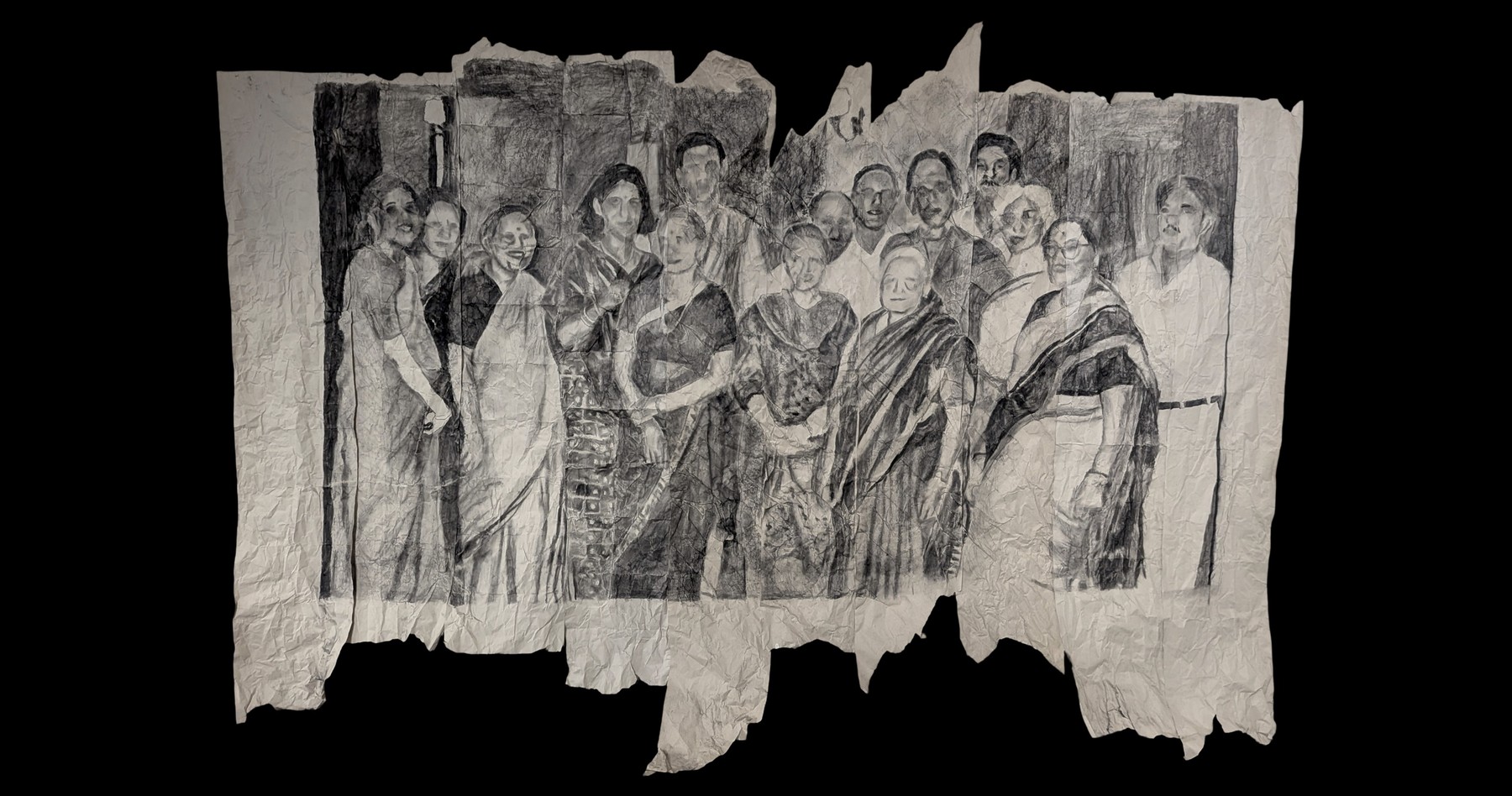
Through drawing, painting and print, this body of work explores ideas of belonging and transgenerational trauma within the context of the Partition of India, the largest forced migration in history. Working with an archive of photographs, the act of repetition, overlapping, obscuring and blurring of imagery, mirror feelings of displacement. Painting and drawing members of my family is an intimate experience. Closely examining the wrinkles, and contours of each portrait, I discover things I have not noticed before; the sadness in my grandfather’s eyes, the stern expression that my grandmother wears, my aunt’s tiredness, the joy exuding from my great-grandmother’s toothy smile. The photographs I refer to and therefore the images I recreate, reveal the stories of the past.
Cora Sweeney
Artist bio
Cora Sweeney is an artist from California working with oil paint. She graduated with a BA in Studio Art at San Jose University in Spring 2025. Sweeney’s first solo show, Princess Ann Paints, Prays, and Pops an Ibuprofen , took place at the Gale Antakol Student Gallery at San Jose State University in 2024. Sweeney has also had her work in the group exhibitions at the Burren College of Art, Lasting Impressions in the Herbert Sanders Gallery at SJSU in 2025, a group exhibition for the Rome Workshops at the Scuola Leonardo da Vinci, Rome, Italy in 2024, and as part of the ArtWorks exhibition at the Bakersfield Museum of Art in 2020. Cora Sweeney has discussed her painting process and education on the TehachaPod podcast.
Project statement
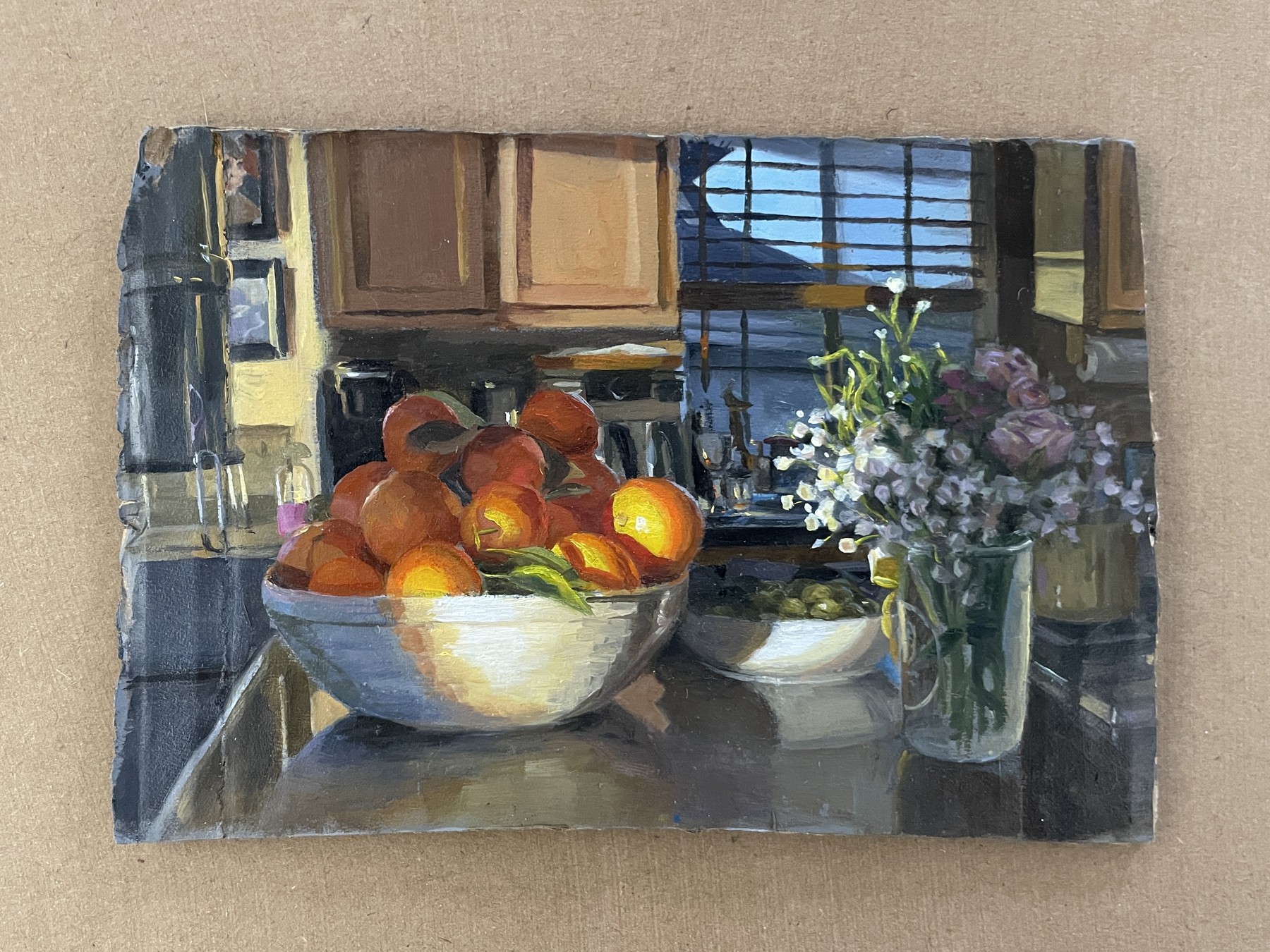
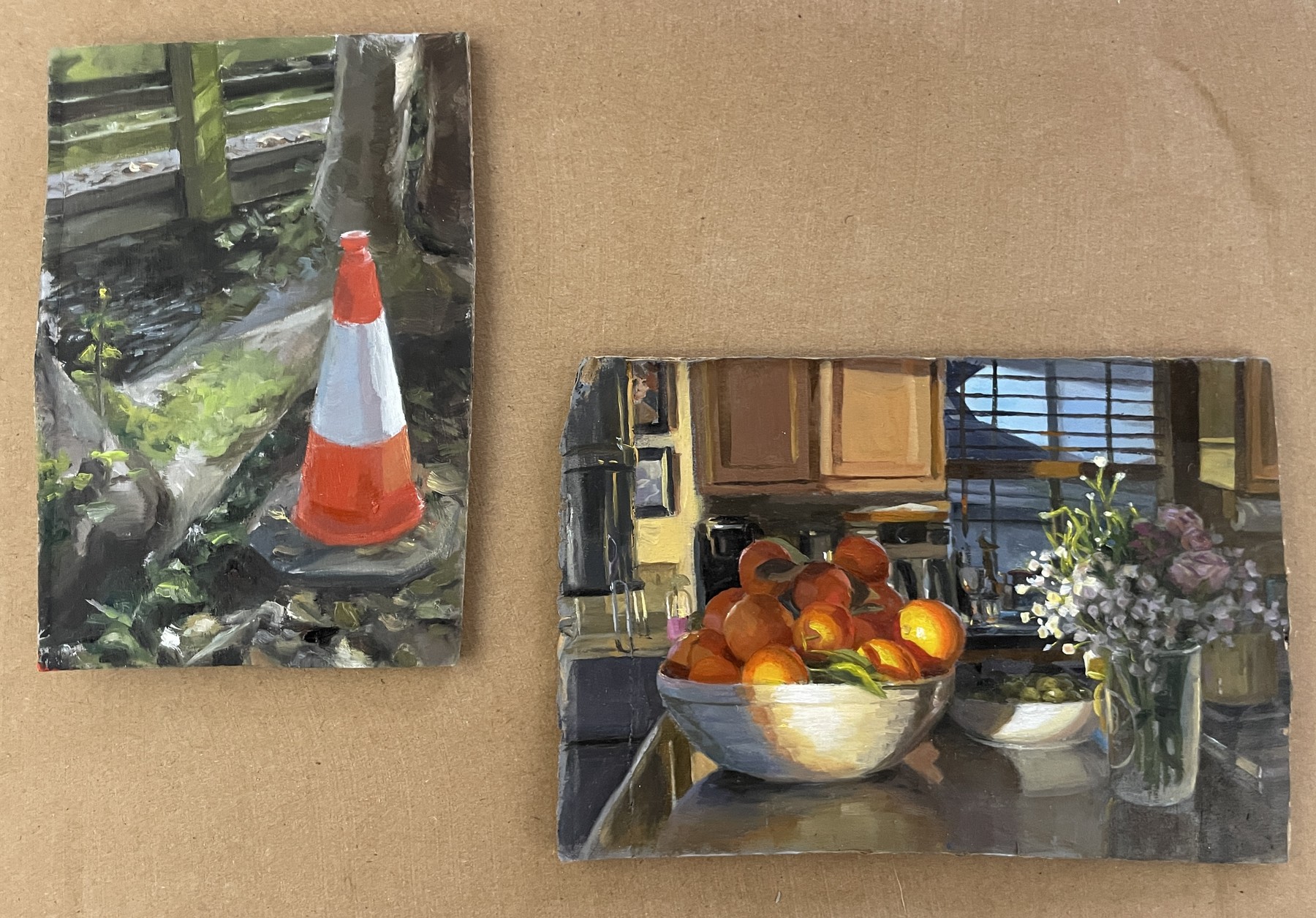
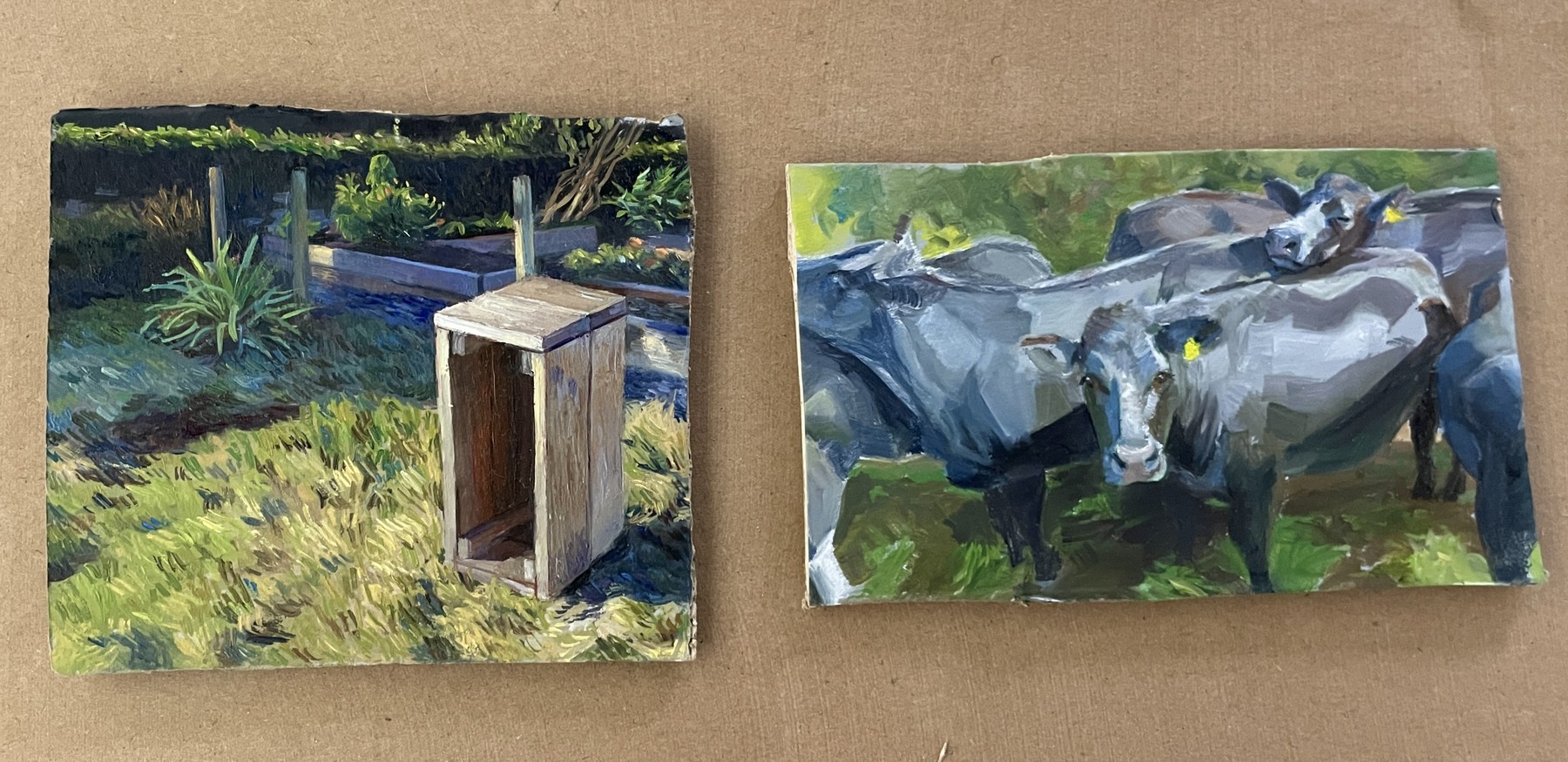
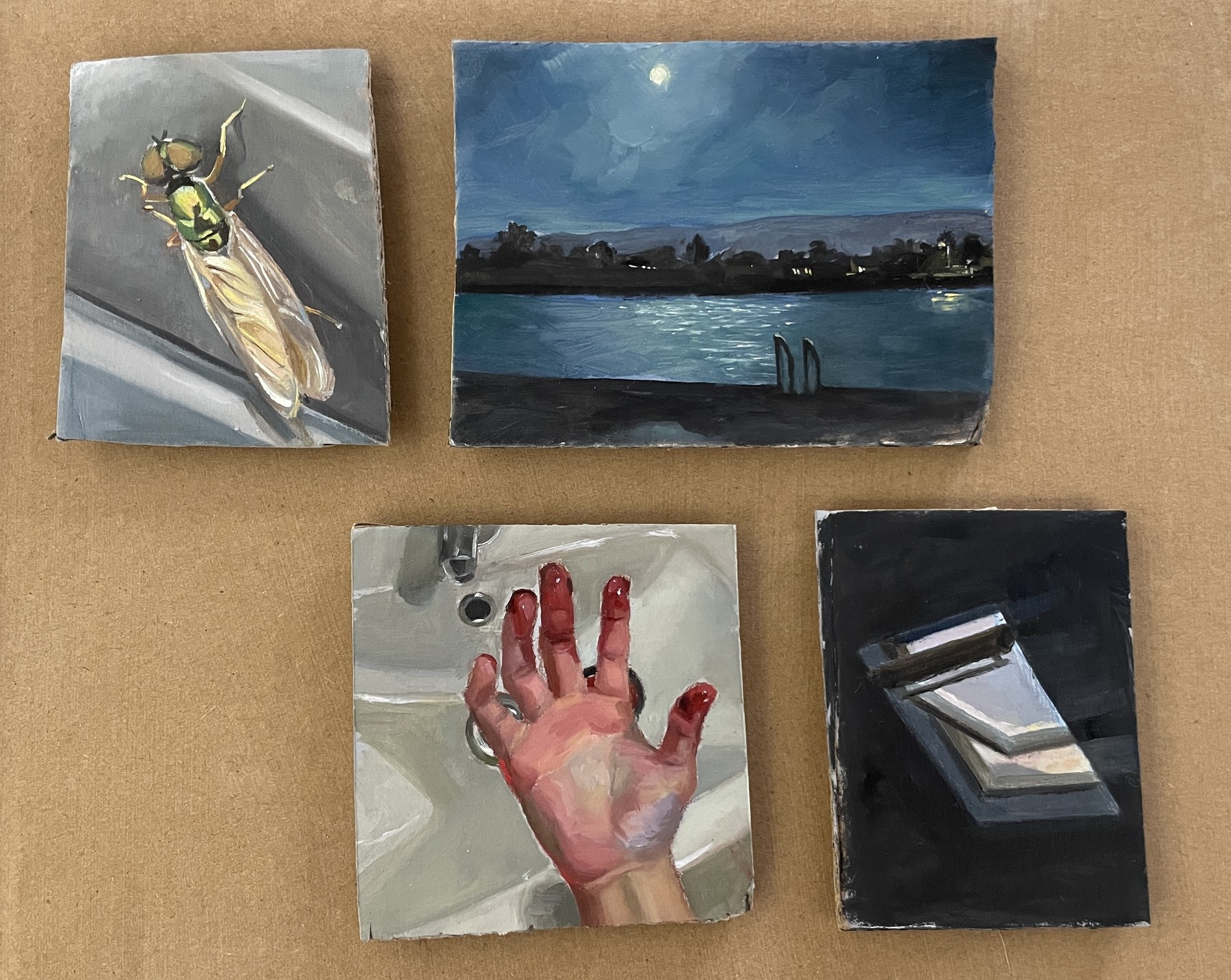
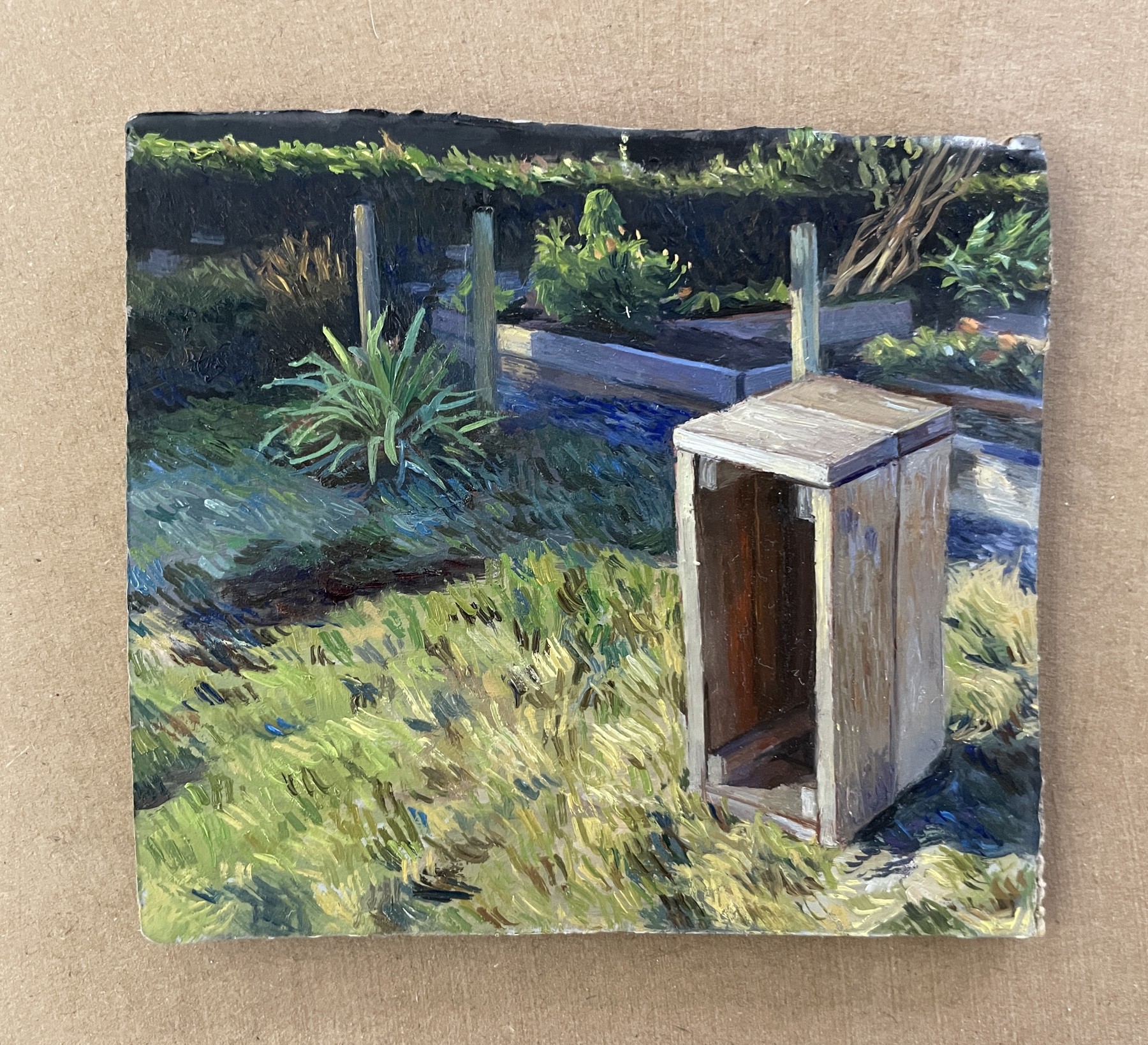
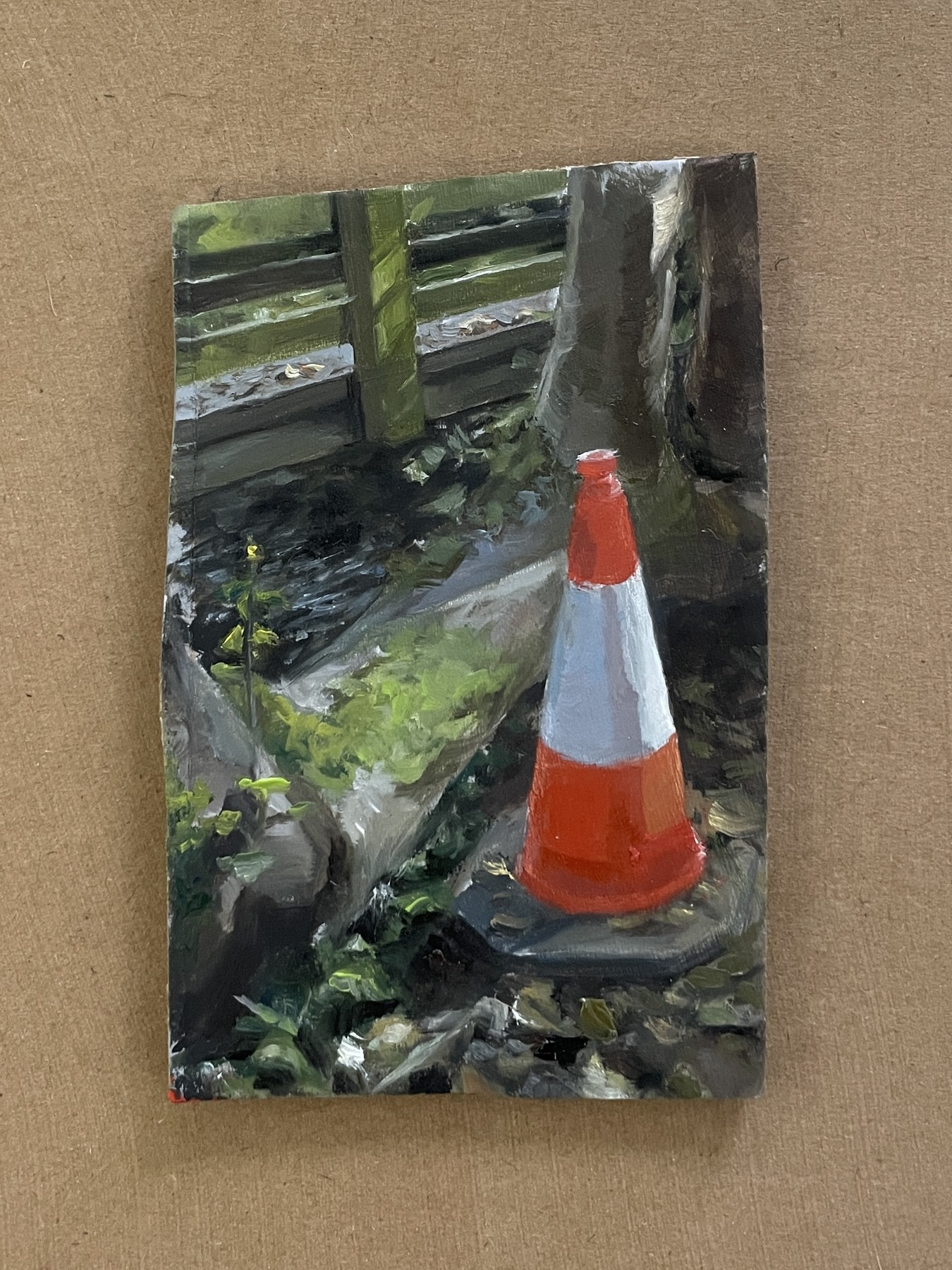
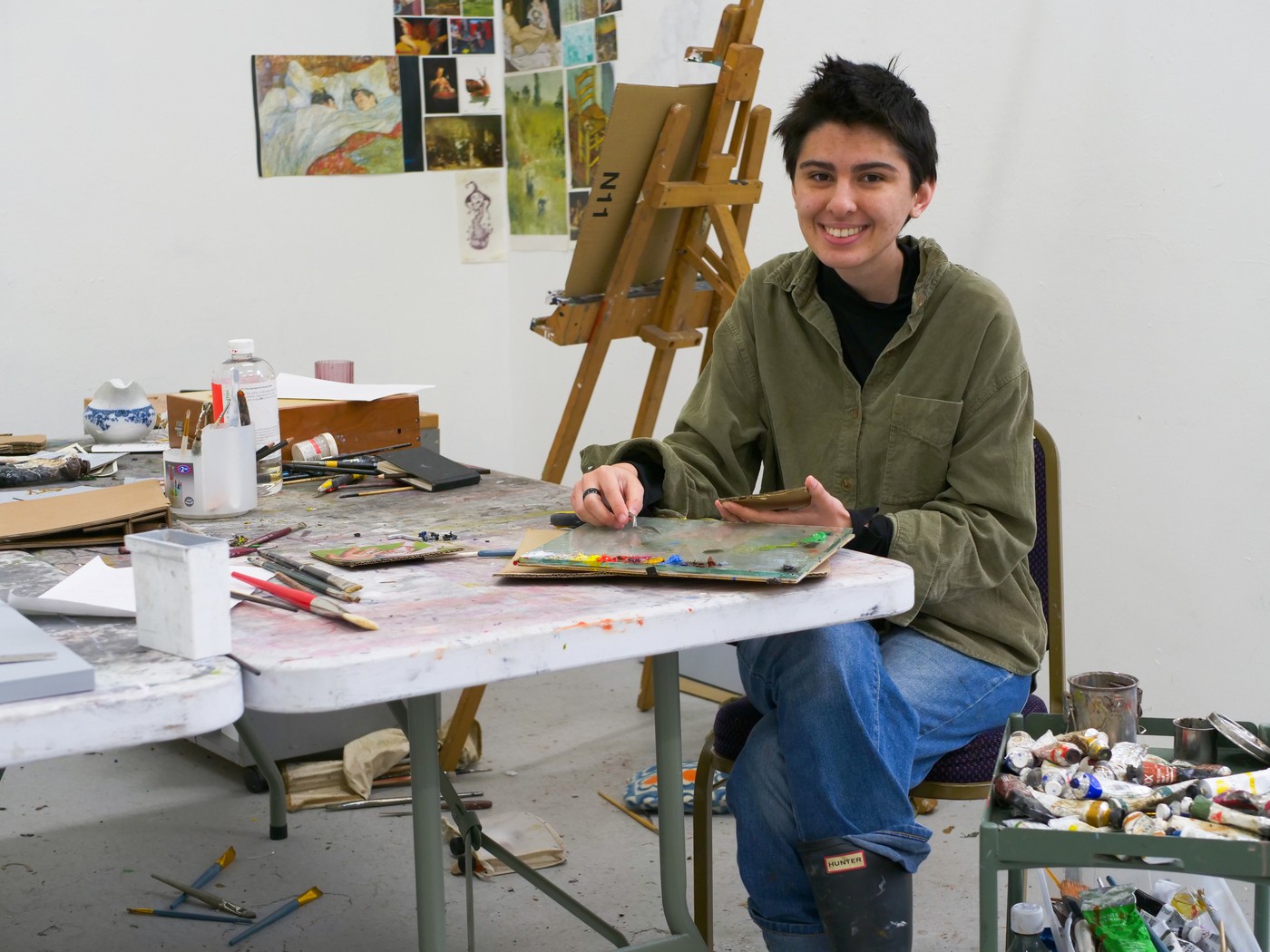
This collection of work consists of miniature paintings on cardboard. The subject and scale of these paintings emulate snapshots. The ability to take a quick photo has become so habitual that many pictures only get revisited when they are to be discarded. The idea of treasuring and finding intimacy in things that were meant to be disposable carries on to the materiality of the work. The cardboard itself retains its original characteristics with rough edges and imperfections showcasing its own history. This history extends beyond just the surface, as the use of cardboard in painting is not a new or novel innovation, with museums housing preserved paintings on cardboard from over one hundred years ago.