In my art practice, I am animated by questions. Questions drive my research, which ultimately drives my making. Some notable questions that have driven my studio work in recent years include:
Who made the river a cyborg?
What would happen if the spine of a book was a point rather than a line?
As a trans person, is it better to be seen accurately, or not seen at all?
Can fog be an aspirational figure for trans embodiment and resistance?
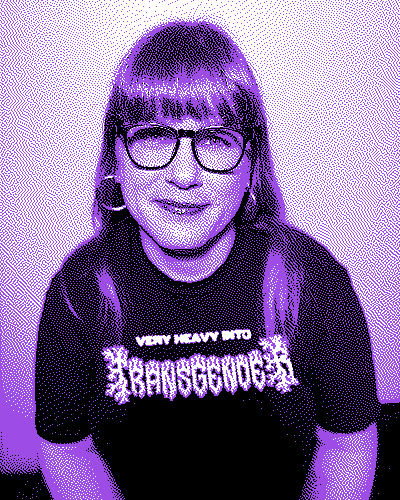
Through questions like these, I begin to create the objects, scenes, and interactions that form the basis of new works. These questions stem from an ongoing fixation with the politics of visibility, and my lived experience as a transwoman in the United States. More specifically, I am focused on the trans body as a site of contemporary productions of the inhuman, and of violence (physical, emotional, institutional, and otherwise) committed in the ongoing effort to reify gender as a binary system. My practice is centered around a critical engagement with current and historical systems of codification and control, to draw the viewer into an affective exploration of what it means to inhabit a fluid body subjected to colonial logics of visualization meant to fix, delineate, and stabilize. The imagery generated by and surrounding these systems is co-opted and enfolded into the work itself, to interrogate the types of knowledge they produce.
I am deeply invested in material specificity, leveraging the inherent qualities (which are always contested and culturally situated) of materials is a central part of my practice. With technical knowledge that includes code, video, digital fabrication, traditional sculptural processes, writing, and bookbinding, I move works across and through different materials and processes to explore their formal and conceptual potential. This process enacts “trans-” as a tactic and gesture for art making. This movement of ideas across the through materials fundamentally changes my relationship to the material from a fixed understanding of “material as meaning” towards a more fluid understanding of “material as lens or framework”. Within this transdisciplinary approach, intricate systems are employed to create visual form, articulate data, and allude to our habitual ordering of people and behaviors.
Throughout my art making and writing, I am drawn towards producing work that challenges the harmful systems and paradigms that currently threaten trans folks, and have begun to move towards production that imagines more livable futures for trans people. I believe that any future facing work must acknowledge our climate crisis. To this end, I have begun to engage more directly with the ways our relationships to art and technology impact our climate future, and how we might rethink these relationships moving forward. These engagements have impacted my material choices in the studio, and the logistical considerations of my intellectual production and professional practice as a whole.