
Soriah | Tuvan throat singing Concert and Workshop
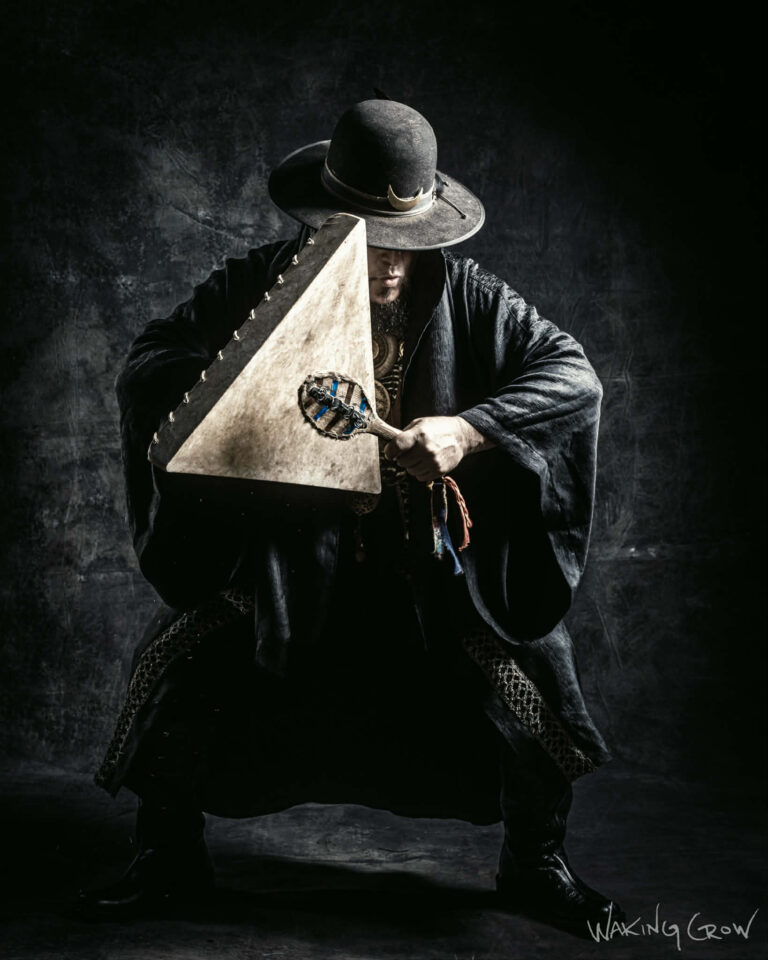
Khoomei Concert and Workshop
Burren College of Art, in collaboration with 2 Gyrlz Performative Arts, is pleased to host a special concert and throat singing workshop, given by the most highly decorated Throat Singer outside of Tuva, Enrique Ugalde (aka Soriah).
The workshop will run from 2-5pm, followed by the concert at 8pm. Both will take place in the Lecture Hall on the Burren College of Art campus.
In the workshop:
⁃ We will discuss the anthropological and historical and cultural context of Khöömei.
⁃ We’ll learn how to produce the three basic sounds of Tuvan throat singing, Khöömei, Kargyraa and Sygyt.
⁃ We will apply those techniques to traditional melodies.
⁃ We will discuss how to keep this ancient tradition alive into the future.
ALL SKILL LEVELS ARE WELCOME!
Workshop Tickets (which include a ticket to the evening concert) can be purchased HERE
Concert Tickets can be purchased HERE
Contact: Lisa Newman +353 (0)65 7077200 or lisa@burrencollege.ie
About Soriah and Khoomei
SORIAH is the stage persona of Enrique Ugalde, an internationally-acclaimed throat singer and ritual artist who generates experimental soundscapes where ancient traditions are revealed through the lens of modern experience.
Birthed in one of the most historically isolated locations on the planet, Tuvan throat singing is a musical sound like no other. Mysterious, primordial and awash in a deeply visceral drone, it invokes the full range of the natural world – from deep mountain roots to the whistle of birds in flight.
SORIAH weaves Tuvan throat singing, pre-Columbian sounds, classical Indian raga, and modern Western styles, looping and processing his voice and traditional instruments into lush sonic tapestries. His lyrics are often written in Nahuatl (Mexica/Aztec) or Tuvan, preserving and expressing cultural mysteries with reverence and wonder.
In 2008 SORIAH was awarded “Best Foreigner” at the Üstüü-Khüree Festival in Tuva and received the “Third Laureate” award in the 2008 Fifth Quinquennial Ethnomusicology Symposium, the highest honor a non-native Tuvan had yet achieved in this field. In 2019 he won the award for best Kargyraa in the International “Khöömei in the Center of Asia” Festival, in 2020, he was awarded the title “Magical Musician of Khöömei”, and in 2022, he won the first place in the International “Khoomei in the Center of Asia” online competition. His entry into the Tuvan Anthropological Museum speaks to the deep impact his work has within its native culture.
When not visiting or competing in Tuva, SORIAH showcases to sold-out crowds in Europe, Japan, Mexico, and the United States. He has shared the stage with artists including Peter Murphy and David J (Bauhaus), cEvin Key (Skinny Puppy), Perry Farrell (Jane’s Addiction), Liberation Movement, and Clan of Xymox. He has contributed to studio recordings of Modest Mouse, The Dandy Warhols, Thor and Friends and Hans Joachim Roedelius. He was also a noted performer at the 2009 Peace Ball to celebrate Obama’s inauguration in Washington, D.C.
He also has collaborated with the renown soundtrack composer, Yasunori Nishiki on the 2021 Konami video game “Solomon Program”.
Through his extensive humanitarian work, SORIAH remains dedicated to reminding audiences of traditions that transcend time and cultural boundaries, heightening awareness and revealing the divinity of each precious moment.
HISTORY
Khöömei (pronounced, “hoo-mei”) is an ancient style of singing believed to originate in an area now known as Tuva in Southern Siberia. The trance-like intonations are created by manipulations of the throat region that gives rise to two or more harmonizing pitches over a fundamental resonating frequency. For these reasons, Khöömei is commonly referred to as Tuvan throat singing amoung the Western Nations. Khöömei is an oral tradition-based cultural phenomenon that developed, in part, due to the spacious landscape of Southern Siberia. Singers often will seek out just the right river bend, steepe or mountainous cliff, searching for a balanced positioning which will prove most conducive to their throat singing, leading to resonant vocalizations able to traverse great distances. The heart of Khöömei lies in the inherent animism expressed in the mimicry of natural sounds. It is said that one can call a deer or moth to oneself given the proper technique met with purity of intention. It is unknown as to how old the practice has been in place. The Tuvans say that Khöömei is from a time before language.